
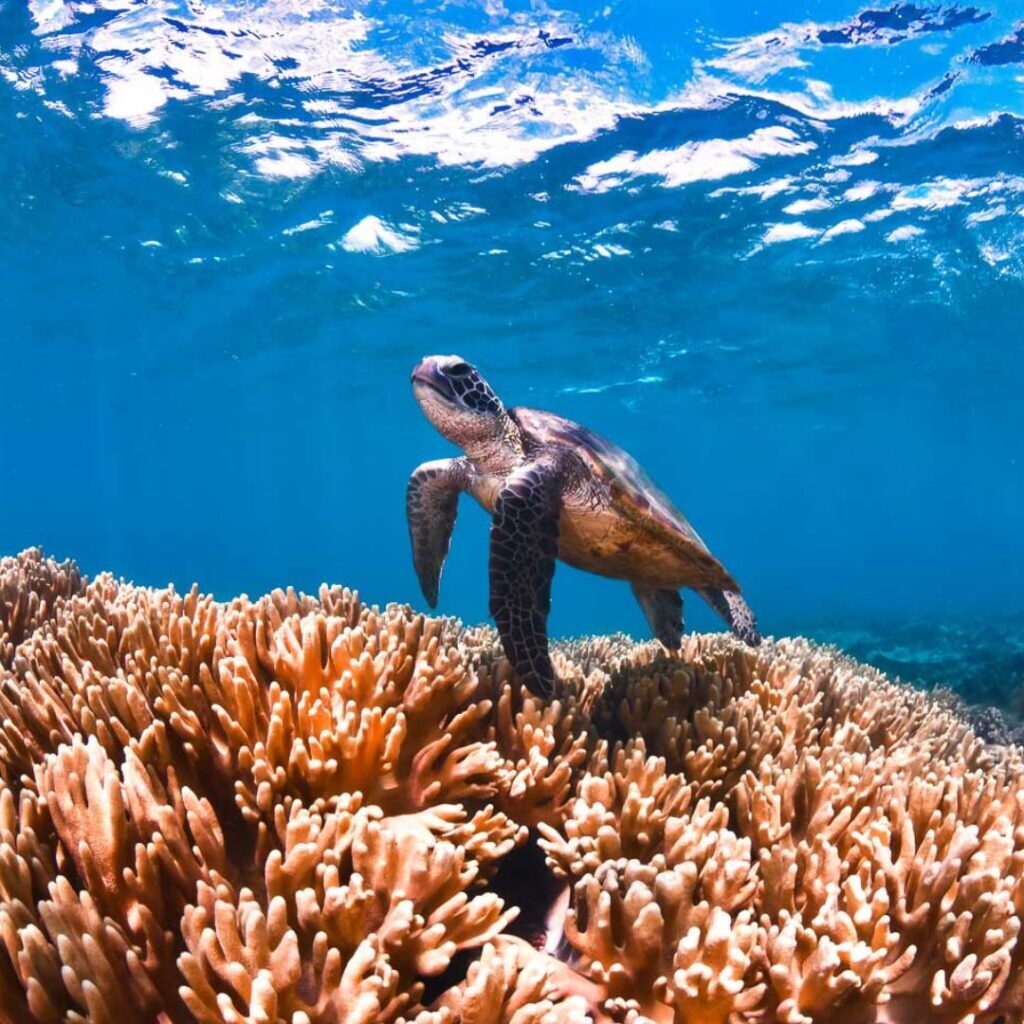
The San Blas Islands are a sanctuary for vibrant marine ecosystems, offering unparalleled opportunities to experience the diverse wildlife in San Blas Islands. Imagine dipping your snorkel mask into crystal-clear waters and coming face-to-face with a technicolor parade of tropical fish, or watching sea turtles glide past your beach hut at sunrise. With our boat trips between Panama and Colombia, you’ll explore this underwater wonderland up close while island-hopping between these two countries.
What Marine Animals Can You Spot While Snorkeling?
The coral reefs here teem with life, making every snorkel session unforgettable. Common sightings include:
- Parrotfish: These neon-colored grazers crunch on coral with beak-like teeth, leaving trails of white sand in their wake. Scientists estimate that a single parrotfish can produce up to 90kg of sand annually!
- Angelfish: Look for their striking blue and gold stripes around brain corals and sea fans. The queen angelfish, in particular, is a favorite among photographers.
- Stingrays: Gliding silently over the seabed, often hiding under sandy patches. The southern stingray is most commonly spotted, with a wingspan reaching up to 1.5 meters.
- Moray eels: Peeking out from crevices with their gaping mouths, harmless if left undisturbed. Green morays are nocturnal but can sometimes be seen during the day.
- Lobster: Frequently spotted by local Guna fishermen and served fresh during meals. Spiny lobsters are abundant, especially around coral heads.
- Clownfish: Found darting in and out of anemones, these tiny fish are a highlight for many snorkelers.
- Porcupinefish: Their ability to puff up into a spiky ball makes them a fascinating sight.
Are There Sea Turtles in San Blas?
Absolutely. The archipelago is a critical habitat for three species:
- Green turtles: Often seen nibbling seagrass in shallow lagoons. These turtles can weigh up to 200kg and are vital to maintaining healthy seagrass beds.
- Hawksbills: Recognizable by their hooked beaks, they feed on sponges in coral reefs. This species plays a key role in reef ecosystems by controlling sponge populations.
- Leatherbacks: The giants of the turtle world nest on nearby Armila Beach (May-September). Witnessing a leatherback laying eggs under the stars is a bucket-list experience. These turtles can weigh over 500kg and dive deeper than any other sea turtle species.
The Guna Yala region is one of the few places where all three species coexist in harmony.
What Birds Will You See on the Islands?
The islands and mangroves are a birder’s paradise:
- Frigatebirds: Watch males inflate red throat pouches to attract mates. Known as "pirate birds," they often steal food from other seabirds.
- Pelicans: Dive-bombing for fish is their signature move. Brown pelicans are particularly common and can dive from heights of up to 20 meters.
- Herons and egrets: Wading through tidal pools at sunrise. The great blue heron is a frequent visitor, standing tall at over 1 meter.
- Ospreys: Circling overhead with keen eyes locked on the water. These raptors are expert fishermen, with a success rate of over 70%.
- Red-footed boobies: Found nesting in trees on outer islands, these birds are known for their bright red feet.
The San Blas Islands host over 50 bird species, making it a hotspot for birdwatching enthusiasts.
Ready to explore San Blas?
Discover untouched islands, turquoise waters, and an authentic Caribbean journey with San Blas Adventures.
Do Dolphins and Whales Visit San Blas?
While not guaranteed, lucky travelers might encounter:
- Bottlenose dolphins: Riding the bow waves of boats between islands. These social mammals often travel in pods of 10-30 individuals.
- Humpback whales: Migrating through deeper channels (July-October). These whales travel up to 16,000 km annually and are known for their acrobatic breaches.
- Orcas: Rare but possible sightings in open waters near Colombian routes. Also known as killer whales, they are apex predators in the ocean.
- Pilot whales: Occasionally spotted in deeper waters, traveling in tightly knit groups.
The Caribbean waters around San Blas are rich in marine biodiversity, offering unforgettable encounters with these majestic creatures.
How Does the Guna Community Protect Wildlife?
The indigenous Guna people have sustainably managed these waters for centuries. During your cultural immersion, you’ll learn:
- How they fish using handlines and spears to avoid overharvesting. This traditional method ensures fish populations remain stable.
- Why coral reefs are protected under Guna laws. The community actively enforces no-take zones to preserve marine habitats.
- Traditional methods for collecting coconuts without harming palms. This sustainable practice supports both the ecosystem and the local economy.
- The importance of seasonal fishing bans to allow fish stocks to replenish.
- Efforts to reduce plastic pollution and protect nesting sites for sea turtles.
The Guna community’s conservation practices are a model for sustainable tourism worldwide.
When Is the Best Time for Wildlife Sightings?
Marine life is active year-round, but seasons matter:
- December-March: Calmer seas ideal for snorkeling; more fish near shores. Water visibility often exceeds 30 meters.
- April-June: Peak turtle nesting begins; warmer water visibility. This period also coincides with coral bleaching monitoring efforts.
- July-November: Whale migration and vibrant coral spawning events. Night snorkeling during coral spawning is a magical experience.
Pro tip: Bring a waterproof camera or GoPro—you’ll want to capture every moment of this aquatic safari. Whether you're traveling by boat between Panama and Colombia, taking a round trip from Panama, or chartering a private vessel, the journey through San Blas becomes a front-row seat to nature’s most dazzling show. Whether you’re snorkeling among parrotfish, observing sea turtles, or marveling at frigatebirds, the wildlife in San Blas Islands will leave you in awe.
Frequently Asked Questions
What marine animals can snorkelers commonly see in San Blas?
Snorkelers often see parrotfish, angelfish, stingrays, moray eels, lobsters, clownfish, and porcupinefish. The vibrant coral reefs teem with life, making each snorkeling session unforgettable with diverse sightings.
Are there sea turtles in the San Blas Islands?
Yes, the San Blas Islands are a critical habitat for green, hawksbill, and leatherback sea turtles. You might see them nibbling seagrass, feeding on sponges, or, rarely, nesting on nearby beaches.
What types of birds might I see on the San Blas Islands?
The islands are a birder's paradise, with sightings of frigatebirds, pelicans, herons, egrets, ospreys, and red-footed boobies. Over 50 bird species make these islands a hotspot for birdwatching.
Can I see dolphins or whales in San Blas?
While not guaranteed, lucky travelers might spot bottlenose dolphins, humpback whales (July-October), or even pilot whales. Orca sightings are rare but possible in open waters.
How does the Guna community protect San Blas wildlife?
The Guna people sustainably manage their waters through traditional fishing, enforcing protected coral reefs and no-take zones, and observing seasonal fishing bans. They also work to reduce plastic pollution and protect sea turtle nesting sites.